Why Wait?
Before the Law by Franz Kafka
Nevaeh Magee's Assignment #1 Blog Post
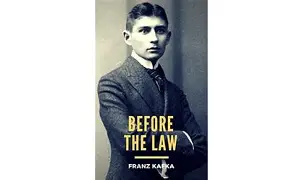
Image rights: https://i.gr-assets.com/images/S/compressed.photo.goodreads.com/books/1505933491i/36275000._UY630_SR1200,630_.jpg
Historical Context
Before the Law by Franz Kafka tells the story of a man from the country who spends his entire life waiting for permission to enter "the Law," only to die without ever getting to step through the gate. Historically, Kafka wrote this text during an era where Europe was drowning in administrative practices and legal systems; the early 1910s. Kafka himself worked in an insurance office dealing with administrative rules.
The stories' themes of waiting, gatekeeping, and feeling powerless were pulled directly from Kafka's lived experiences during a time where ordinary people felt blocked by systems they had no control over.
Characters
We are introduced to the Man from the country who holds characteristics of your everyday person. He is not given a name, age, or background. There is no description of his appearance or where he comes from. Just simply, the country. He is outwardly patient, hopeful, obedient, and a bit fearful.
Next, we meet the gatekeeper. Unmoving, mysterious, authoritative, and not "the Law" himself, but he who represents it. His only job is to guard the gate and keep unwarranted guests away. He is a steady character in this story.
Major Theme: Self-Limitation & Obedience
I think that one of the strongest themes in this story is the man's biggest obstacle being himself! He waits for permission that is never granted, "here he sits for days and years" (Page 1), preventing himself from following his dream of seeing what is on the other side of that gate. He is fearful of breaking rules that were never actually stated. The doorkeeper never forbids entry, he only says, “but not now” (Page 1), and the man upholds the obedience himself. This theme stands out to me specifically because it becomes a metaphor for how people (including me) let fear stop them from pursuing opportunities. Many times, in my life I have thought to myself "but what if..." when in reality, there was no "what if," only my personal worries holding me back.

Writing Style
Kafka's writing style is simple on the surface, but thorough when you commit to reading it. I would label the style as thorough minimalism, but it is written similarly to a parable. It is short, plain, straightforward, and like something you would hear told out loud around a campfire rather than something you would read in a book. Which makes it fun! There isn't much dramatic language or emotional connection as he strips away everything except the situation itself, giving his audience the chance to immerse ourselves in it, creating an almost dreamy setting.
This writing style seems intentional because giving a timeless feeling to the story reiterates the idea that this could be happening to anyone, anywhere, at any moment in time. Even though the man is essentially wasting his life away sitting at the gate, the narrator never reacts or judges him for it. To me, this makes his death heavier because "it is what it is." The use of repetition in this story contributes to how it makes you feel as the reader, too. The man keeps asking, waiting, and nothing ever changes for him. The writing seems to mirror his slow, steady, uncertain life, which is a substantial touch to the tone of this story.
Connecting...

The man in Kafka's story spends his entire life waiting because he is scared to do something wrong. As a future educator, one of the biggest situations I can connect this story to is how dangerous it can be to let fear stop you from BECOMING. He does not want to break a rule or step out of his moral box and because of his fear, he never discovers what could have been on the other side of that gate. This is a lesson I want my students to understand. When you are afraid of making mistakes, you block yourself from learning, growing, and finding greatness.
In a classroom, mistakes aren't something you avoid. You make them and learn from them! They are how you figure things out and build confidence. Imagine if the man went through the gate despite being told no, only to discover that there were no consequences, and that walking through the gate was made for him. I believe that he would have gained confidence and used it in other areas of his life. Kafka's story shows what happens when you let hesitation win.

Sources: on-kafka-before-the-law.pdf Before the Law by Franz Kafka, Kafka's 'Before The Law': Exploring The Writing Timeline And Context | LawShun
Create Your Own Website With Webador